From the Amazon to Auckland.
A 12,000-kilometre journey from the Pará floodplains to a bowl shop in Auckland. Here's every step of it.
A frozen block of açaí pulp lives a longer life than most food you'll eat this year. Ours travels roughly 12,000 kilometres, changes hands seven times, and stays below −18°C for the entire journey. Here's how.
Stop 1 — The harvest, Pará (Brazil)
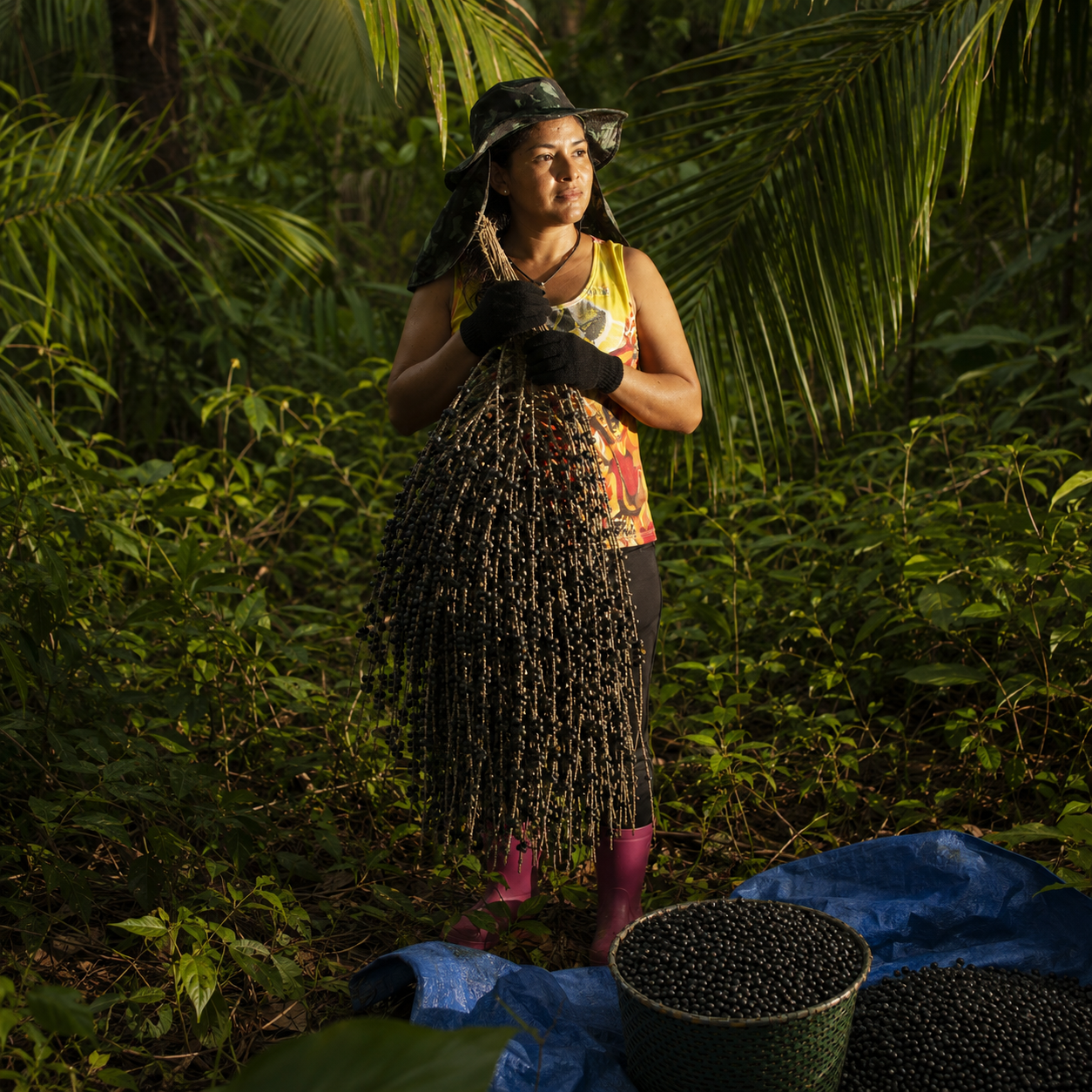
Real açaí only grows in one place: the Amazon rainforest, mostly in the Brazilian state of Pará. Palms grow to 20-25 metres, most of them wild along the floodplains of the Amazon river system. Harvest happens between July and December — the local safra season.
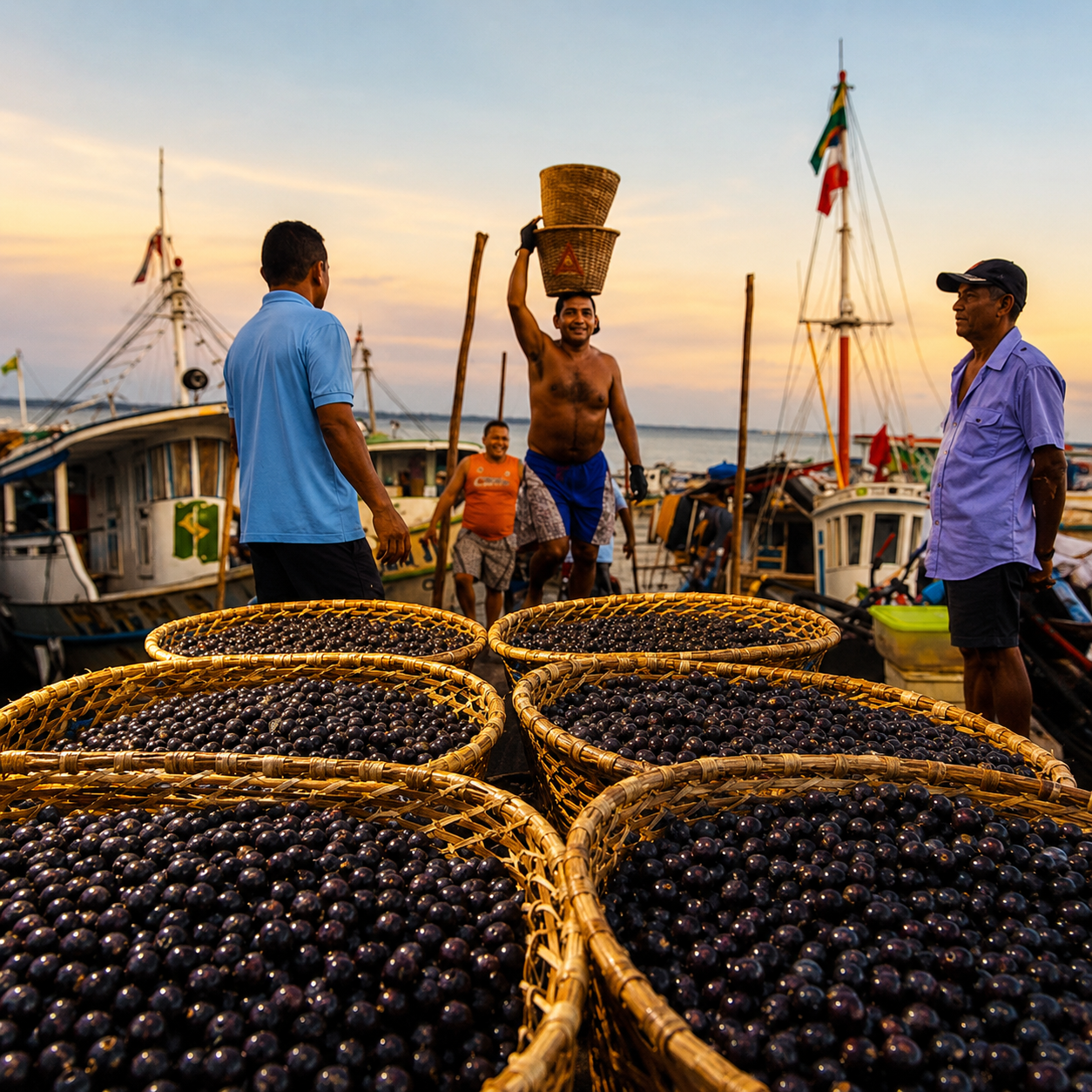
The berries are picked by hand. That's not a marketing line — it's a physical necessity. Someone (usually a young man from a riverside community called a ribeirinho) climbs the palm barefoot, with a rope loop between the feet, up to 20 metres. At the top, they cut down bunches of berries and drop them into hand-woven baskets called rasas. A full basket weighs about 15 kilograms.
Stop 2 — The river, to Belém
The full baskets are loaded onto small wooden boats and moved along the tributaries of the Amazon river toward Belém, the largest city in Pará. Depending on where the harvest happened, this leg alone can take a full day of river travel.
Time matters here — açaí berries oxidise fast. From picked to processed needs to happen inside 24 hours, otherwise the pulp loses colour and fat content. This is one of the reasons why real açaí was, until recently, almost impossible to export.
Stop 3 — The processing plant, Belém
At the plant, berries go through three quick steps:
- Washing. To remove river debris and any oxidised skins.
- Softening. A warm-water bath (around 40°C for a few minutes) that loosens the pulp from the seed. This is not cooking — it's below the temperature where nutrients degrade.
- Mechanical pulping. The softened berries pass through a machine that separates seed from pulp. Only pulp comes out the other side.
The pulp is packaged into 100g sachets or larger blocks, then flash-frozen at −30°C within an hour of leaving the machine. From this point on, temperature is everything.
Stop 4 — Cold storage and export, Belém → São Paulo
The frozen pulp is trucked in refrigerated containers (called reefers) from Belém to the port of Santos, near São Paulo. That's a 3,000km inland journey through Brazil, which takes 4-5 days. The reefer stays at −18°C the whole way, monitored by data loggers.
Stop 5 — Ocean freight, São Paulo → Auckland
At Santos, the container is loaded onto a container ship. The route varies — usually via Singapore, sometimes via Cape Town. Sea time is roughly 35 to 42 days. During that time, the reefer runs on its own power (each one has an engine) and its internal temperature is logged every 15 minutes.
If the temperature spikes above −15°C at any point during transit, the whole container is rejected on arrival. Insurance covers the shipper, but the pulp is lost.
Stop 6 — Auckland port & MPI clearance
In Auckland, the container is offloaded and inspected by MPI (Ministry for Primary Industries). Every frozen food import gets checked for temperature integrity, documentation, and biosecurity. Our shipments are also independently tested for pesticide residues and heavy metals — we keep the certificates on file for anyone who asks.
Once cleared, the container moves to our cold-storage partner in Rosedale, Auckland. Total elapsed time from harvest: roughly six weeks. Temperature at any point of the journey: never above −18°C.
Stop 7 — Distribution to partner stores
From our warehouse, orders are dispatched in insulated packaging with gel packs, going out to cafés, bowl shops and gyms across New Zealand. Delivery is typically same-day within Auckland and overnight elsewhere in the North Island.
Store freezers hold the pulp at −18°C. On the morning of service, staff pull sachets, temper them, and blend them with a splash of water or milk to make the base for that day's bowls. From frozen block to your bowl: about 20 minutes.
Why we do it this way
There's an easier path — buy freeze-dried açaí powder in bulk, ship it in cardboard boxes at room temperature, and blend it with juice and sugar. It's what most of the industry does. It's cheaper, faster, and doesn't need cold-chain logistics.
The problem is that it isn't really açaí anymore. Freeze-drying strips out most of the fat, which is where the flavour and much of the nutrition lives. What you get on the other end is a bright purple powder that needs sugar to taste like anything at all. (We wrote a full guide on this: What is real açaí?)
Six weeks, seven stops, −18°C the whole way. That's what real açaí costs — in effort, not just dollars.
If you're a café owner and you'd like to source real frozen açaí instead of powder, get in touch at sales@savoramazon.co.nz. We can walk you through pricing, minimum orders, and how to set up your freezer for it.
Try it at a partner store
Eight cafés across New Zealand serve our açaí — with 15% off through The Purple Pass.
See participating stores