What is real açaí?
And why most bowls out there aren't.
A short guide to spotting the difference between real Amazonian açaí and the powdered, sweetened blends most cafés call "açaí".
Walk into ten "açaí bowl" shops around Auckland and you'll get ten different products. Some are real açaí. Most aren't. Here's how to tell them apart — and why it matters.
What açaí actually is
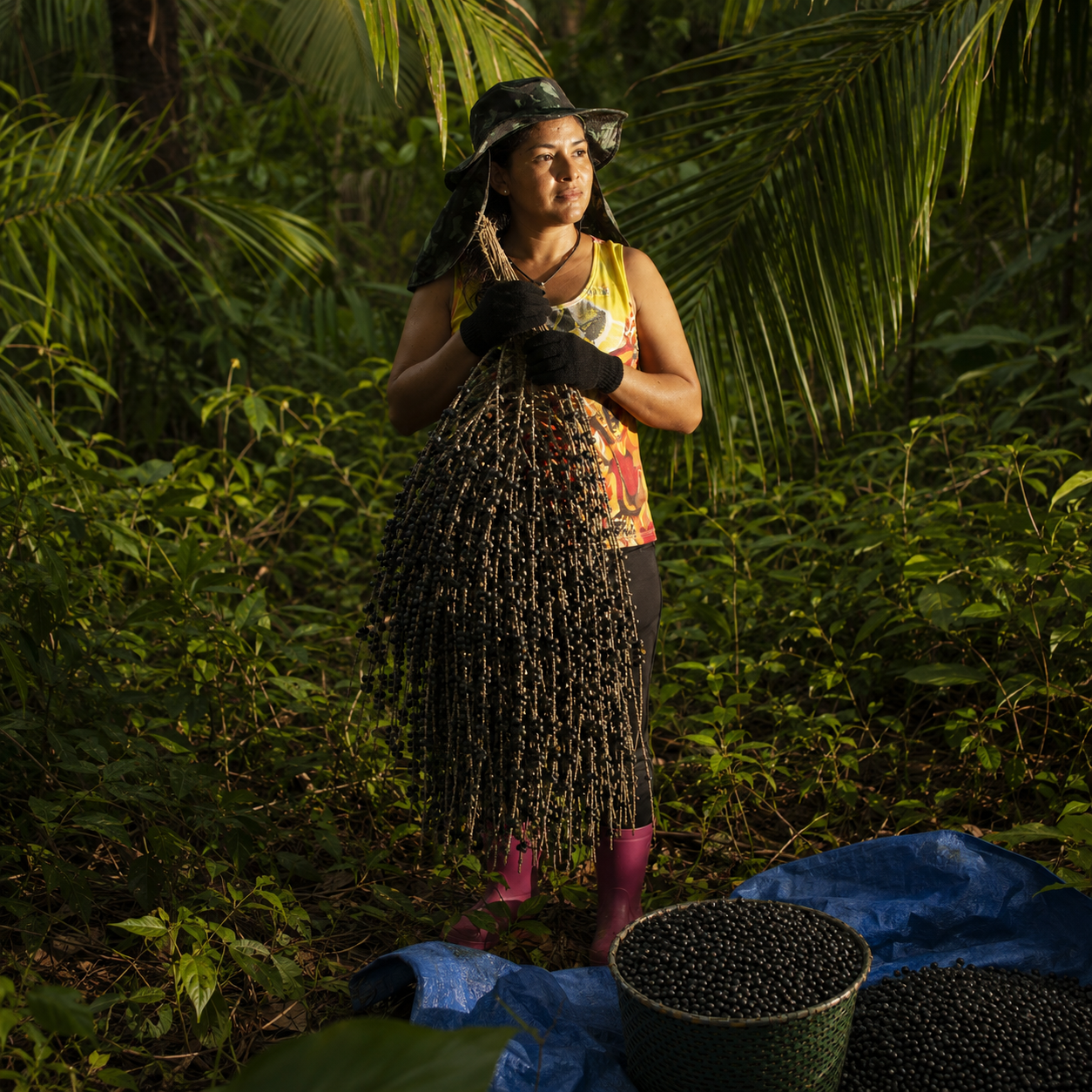
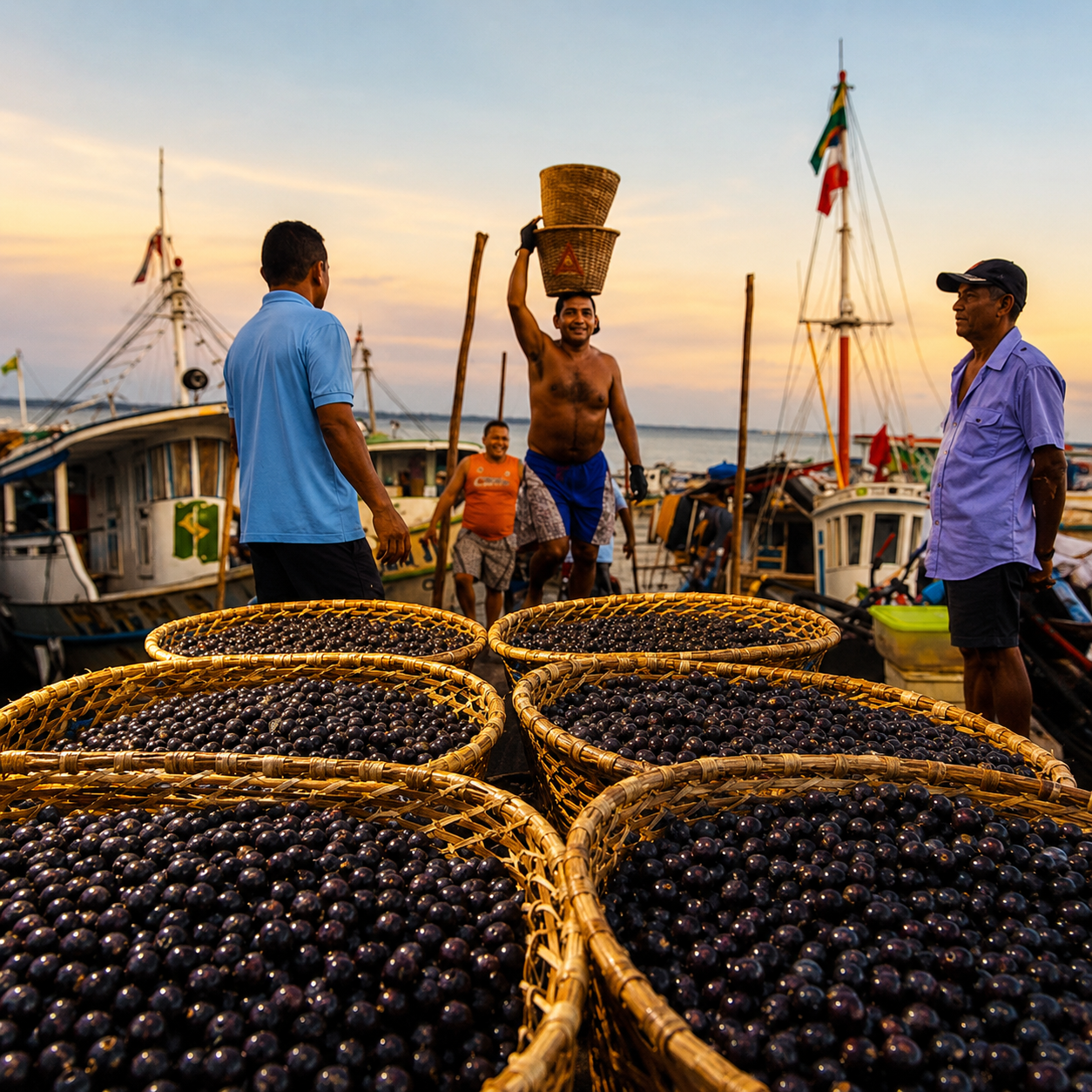
Açaí (pronounced ah-sah-EE) is a small purple berry that grows on tall palm trees in the Amazon floodplains, mostly in the Brazilian state of Pará. It has been eaten by Amazon communities for centuries — traditionally as a thick, unsweetened pulp served with fish or manioc flour.
The berry is small — about the size of a blueberry — but 90% of it is seed. Only a thin outer skin is edible, which is why real açaí is expensive: you need a lot of berries to make a little pulp. Every kilogram of açaí pulp starts with roughly four kilograms of harvested berries, and every one of those berries is picked by hand at the top of a palm tree.
The three types of "açaí" you'll find
Not everything called açaí is açaí. There are three products commonly sold under that name, and only one of them is the real thing.
1. Real açaí pulp (frozen)
This is what we supply. The berries are picked, washed, mechanically pulped, flash-frozen and shipped as blocks or sachets. Ingredient list: açaí. That's it. Sometimes a little water to help the pulp flow. It's naturally low in sugar and slightly bitter — closer to dark chocolate than to a smoothie.
2. Açaí powder
Freeze-dried açaí ground into powder. It's shelf-stable and light to ship, which is why it's popular. The trade-off: freeze-drying destroys much of the fat content, which is where a lot of the flavour and nutrients live. Powder-based bowls tend to taste flat unless heavily sweetened.
3. Açaí blends and syrups
This is where things get honest-to-goodness misleading. Many "açaí bowls" served in cafés are made from a base blend that contains a tiny percentage of açaí (sometimes as low as 5%) mixed with apple juice concentrate, banana purée, sugar or glucose syrup, food colouring, and thickeners. If a bowl tastes sweet on its own before you add fruit — it's not real açaí.
How to spot the real thing
Four quick checks next time you order:
- Colour. Real açaí is a deep, dark purple — closer to black than to violet. Bright purple usually means colouring.
- Taste. Real açaí is not sweet. It's earthy, slightly bitter, with a faint chocolate-berry finish. If it tastes like sorbet, it's been sugared up.
- Texture. Freshly-thawed pulp is thick and creamy without needing gums or thickeners. If it holds a spoon upright without melting into liquid quickly, that's a good sign.
- Ingredient list. Ask the shop what's in their base. A good answer is "açaí, water". A bad answer starts with "açaí, apple juice, sugar…" and keeps going.
Why we do it the hard way
We import frozen açaí pulp directly from cooperatives in Pará because it's the only way to get real açaí to New Zealand. It's more expensive, it needs cold-chain shipping, and it takes six weeks to arrive. It would be much easier to ship powder in cardboard boxes and call it a day.
But then it wouldn't be açaí anymore — it would be açaí-flavoured. And that's a different product entirely.
Real açaí is one ingredient. If yours has a list, it's something else.
Where to try it
If you're in New Zealand, the fastest way to try real açaí is at one of our partner shops — they all serve pulp-based bowls with our açaí as the base. You can find a full list on our partner stores page.
If you run a café or bowl shop and you'd like to source real açaí, get in touch at sales@savoramazon.co.nz or on our contact form. We can talk pricing, minimum order and cold-chain logistics.
Try it at a partner store
Eight cafés across New Zealand serve our açaí. Find one near you and get 15% off your next 12 bowls.
See The Purple Pass